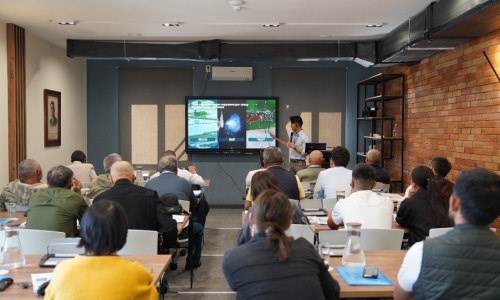
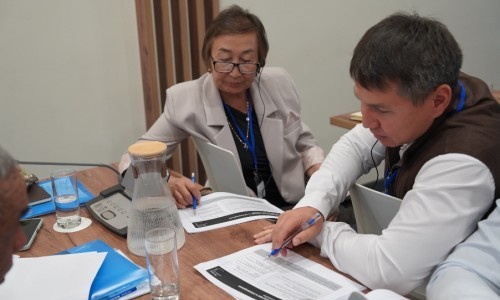
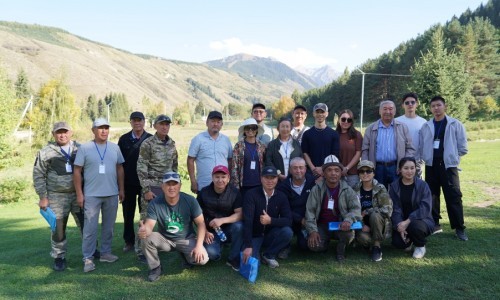
Reducing the risk of zoonotic spillover in protected and conserved areas requires coordinated action across conservation, veterinary and public health sectors. To strengthen this capacity, a practical One Health and biosafety training was held in Karakol from 9 to 11 September, bringing together protected area professionals and specialists in wildlife, livestock, ecosystem and human health from across Kyrgyzstan.
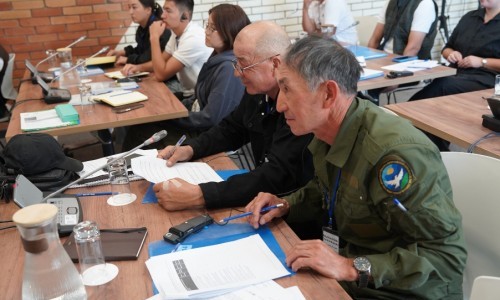
Zoonotic spillover occurs when a pathogen passes from a wild or domestic animal to a person. Reducing opportunities for this transmission means understanding and managing risks where wildlife, livestock, people and their shared environment interact. Around 23 participants took part in the training, representing protected areas and wildlife management authorities, veterinary services, sanitary and epidemiological agencies, the Karakol Anti-Plague Station, veterinary research institutions, hunting and fishing associations, civil society organisations and other relevant stakeholders.
“Nature conservation is an important part of the One Health approach. By improving the health of ecosystems and wildlife, and reducing risky interactions between wildlife, livestock and people—we can help reduce zoonotic spillover before they become crises,” said Dao Nguyen, Senior Programme Manager, IUCN Conservation Action. “In Kyrgyzstan, where people, livestock and wildlife share the same landscapes, this practical approach can help protect nature while strengthening health security.”
This is particularly relevant in the Issyk-Kul region, where protected areas overlap with the Sari- and Upper-Naryn natural plague foci, together covering around 1.25 million hectares in the Ak-Suu and Jeti-Oguz districts. No single institution can effectively address these risks alone. Reducing zoonotic spillover risk requires close collaboration and information-sharing among protected area and wildlife professionals, veterinary services, epidemiological authorities and public health agencies.
“Early detection is essential for reducing zoonotic spillover risks in Kyrgyzstan. Better communication between conservation practitioners who observe changes in the field and the specialised services responsible for surveillance can help us identify potential risks earlier and take appropriate action,” confirmed Maimulov Ravshanbek, Director of the Karakol Anti-Plague Station.
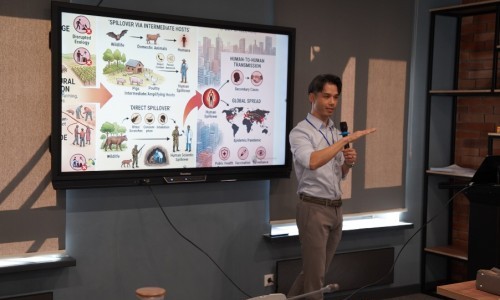
The One Health and biosafety training addressed zoonotic diseases and ecological conditions relevant to spillover risk in Kyrgyzstan, including plague ecology in marmot populations, brucellosis at the livestock–wild ungulate interface, echinococcosis, anthrax and other wildlife health concerns, as well as potential contamination pathways around shared grazing and watering sites.
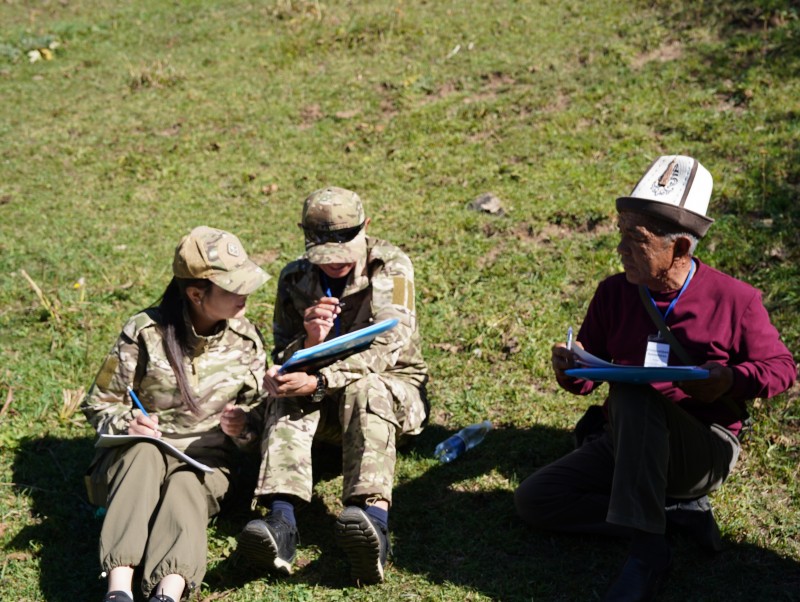
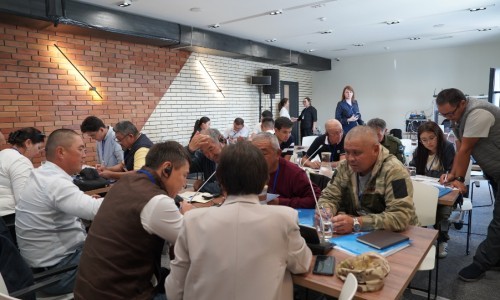
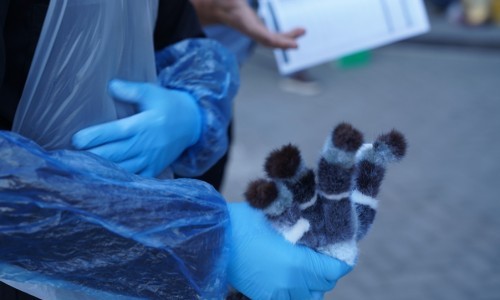
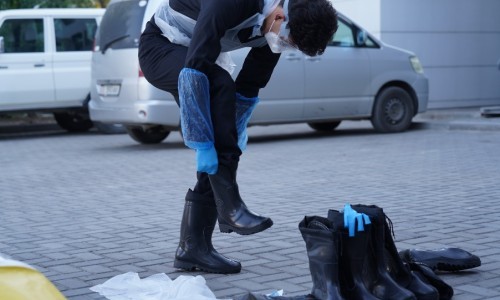
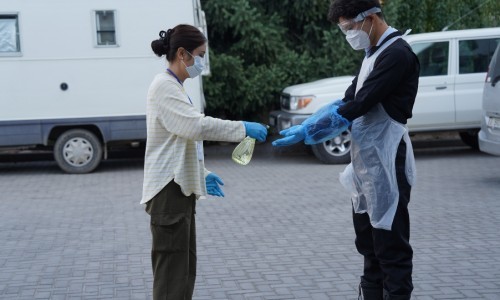
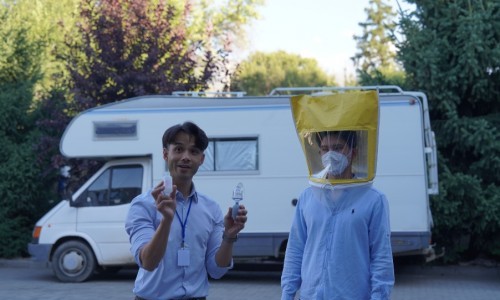
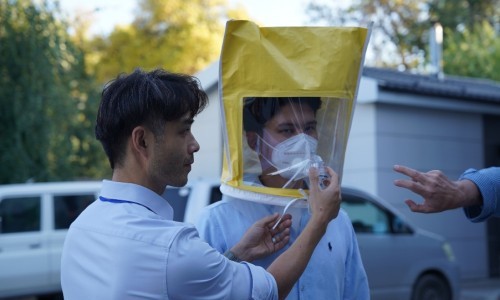
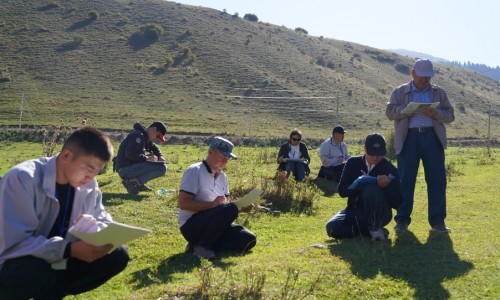
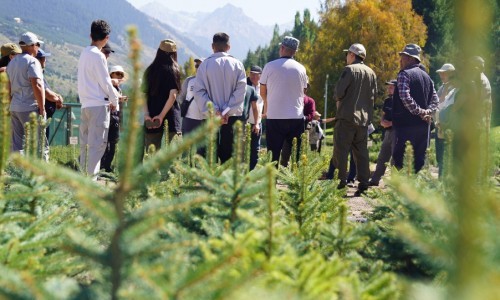
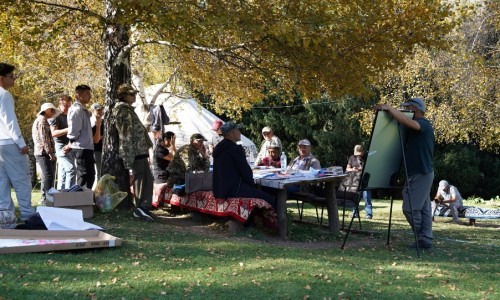
Much of the programme focused on practical application. Participants worked through realistic wildlife mortality scenarios, practised field risk assessment and the safe use of personal protective equipment and explored risk communication at the human–animal–environment interface. A full day was dedicated to field-based learning at Karakol State Nature Park where participants examined points of interaction between wildlife, livestock and people, mapped ecological stressors and potential disease-risk areas, and discussed appropriate management responses.
“Working in protected areas means observing wildlife and changes in the landscape every day, and sometimes we are among the first to notice when something is unusual. Knowing what to look for, how to stay safe and where to report our observations means that our everyday conservation work can help identify and reduce potential risks at the interface between wildlife, animals and people,” reflected Taalai Amanov, staff member of the Khan-Tengiri Nature Park.
“One Health depends on institutions and sectors working together rather than addressing risks in isolation,” said Murat Zhumashev, Director of PF “CAMP Alatoo”. “Bringing relevant stakeholders and other national actors into the same training creates a common understanding of how each can contribute to zoonotic spillover prevention, early warning and coordinated action. This kind of cooperation is particularly important in interconnected landscapes where spillover risks span sectoral boundaries.”
The training was led by Dr Marc Valitutto, Wildlife Veterinarian and Biosafety Officer, One Health Science, and tailored to the different responsibilities represented among participants. “Reducing the risk of zoonotic spillover works best when everyone understands both their own role and when to involve others,” said Dr Valitutto. “A protected area worker may be the first to observe something unusual, a veterinarian may investigate the animal-health implications, and public health authorities may assess risks to people. The goal is to ensure that each person can act safely and that information moves quickly to those best placed to respond.”
The training concluded with an exercise in which participants developed One Health action plans for their protected areas. Drawing on the knowledge and skills gained during the training, participants identified practical approaches to preventing zoonotic disease risks, while promoting the safety and well-being of communities and the health of ecosystems. Through this exercise, participants demonstrated the importance of recognising ecosystem health as an integral part of One Health, alongside human and animal health.
This information was compiled by Alexandra Nikodinovich, Regional Communications Officer, IUCN Regional Office for Eastern Europe and Central Asia (ECARO), email: aleksandra.nikodinovic@iucn.org
Photo PF “CAMP Alatoo”.

Итоги пастбищного сезона 2018 года были подведены на очередном заседании районной пастбищной комиссии (РПК).
More
The development of the unified method, "Monitoring Pastures at the Local Level," is nearing completion.
More
Четыре новых моста построены в 2018 году в Кыргызстане при поддержке ОФ “CAMP Алатоо” и Швейцарской ассоциации “Памирские...
More